



The bankruptcy proceedings of Liberty Częstochowa Sp. z o.o., owner of Huta Częstochowa, ended with the takeover of the company by the State Treasury, represented by the Ministry of National Defense. Adrian Dzwonek, Partner at JGA Legal and Tax Advisory, was the trustee in bankruptcy of the company.
The transaction, worth over PLN 250 million, was carried out under extraordinary circumstances, pursuant to Article 311[1] et seq. of the Bankruptcy Law. This is the first case in history in which the Minister of National Defense has exercised his statutory right to purchase a company in bankruptcy.
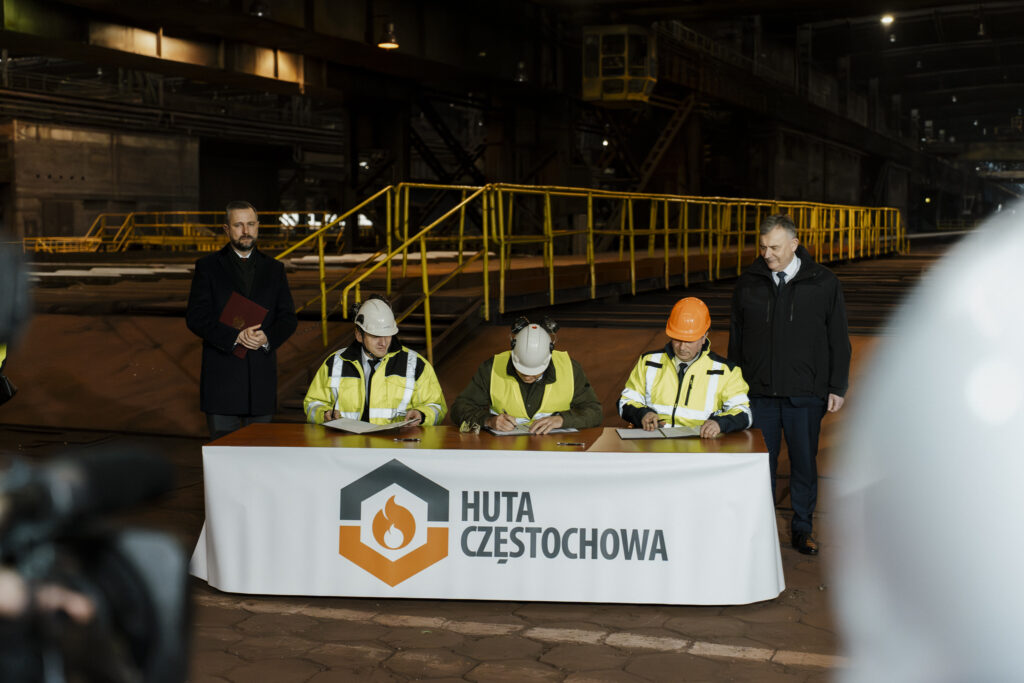
The notarial deed was signed at the plant’s headquarters by Paweł Bejda, Secretary of State at the Ministry of National Defense, and Adrian Dzwonek, bankruptcy trustee. In the presence of Deputy Prime Minister and Minister of National Defense Władysław Kosiniak-Kamysz, a letter of intent was also signed between Polska Grupa Zbrojeniowa, the Węglokoks group, and Huta Częstochowa concerning the use of the plant’s potential for the defense industry.
Proceedings conducted under conditions of extreme risk
When Adrian Dzwonek took over as receiver, the plant was not in production and its financial and organizational situation was critical. The steelworks was struggling with debts exceeding PLN 700 million, a lack of liquidity, the risk of losing its technical infrastructure, and growing tensions among its workforce of over a thousand people.
– It was not classic bankruptcy management focused solely on the sale of assets. The key was to maintain the functionality of the plant, secure the infrastructure, and create realistic conditions for resuming operations, – comments Adrian Dzwonek. When I took on the role of trustee, the company employed about a thousand people. Imagine the scale of emotions among employees who have their own commitments – there were cases where two adult members of the same household worked at the steelworks and had no other source of income. Without these people, without all hands on deck, we would not have been able to do it.
During the proceedings, it was necessary to make non-standard operational decisions, including liquidity management in the absence of financing, negotiations with key media and service providers, maintenance of critical technical infrastructure, and the sale of CO₂ emission units in volatile market conditions.
– One of the most critical moments of the proceedings was the sale of CO₂ emission units. It was a race against the market – their value fluctuated wildly from day to day, and finding the right moment to sell was crucial to ensuring that there would be enough funds to pay salaries and maintain the plant’s infrastructure. The decision had to be made under conditions of great uncertainty, with full awareness of the consequences for the employees and the continued operation of the steelworks, adds the trustee.
Resumption of production and protection of public interest
An important stage in the proceedings was the lease of the company by an entity from the Węglokoks group, which enabled production to resume before the winter season and protected the plant from permanent technical degradation.
At the same time, due to interest from foreign investors, Liberty Częstochowa Sp. z o.o. became the first bankrupt company in Poland to be included on the list of entities of strategic importance to national security. This decision paved the way for the plant to be purchased by the State Treasury under the procedure provided for in the Bankruptcy Law.
– The takeover of Huta Częstochowa is a decision of fundamental importance for national security, defense, and the stability of the region. It is an example of a case in which bankruptcy law has become a tool for protecting the public interest – emphasizes Adrian Dzwonek.
Interdisciplinary support from the JGA team
During the bankruptcy proceedings, the trustee was supported by an interdisciplinary team from JGA Legal and Tax Advisory, providing services covering a wide range of legal, tax, and accounting competences necessary for conducting such a complex project. In the area of taxation, support was provided by Wojciech Sablik, Managing Partner, Tax Advisor, and Lucyna Kwaśniewska-Greinert, Tax Advisor and Property Appraiser. Ongoing accounting services and support in the area of operational finance were provided by Piotr Marzycki, who headed the accounting team responsible for ensuring continuity of settlements during the proceedings.
Legal issues, including the preparation and negotiation of agreements concerning the lease of the enterprise and agreements with the Ministry of National Defense, were handled by a team led by Krzysztof Galwas, Managing Partner, in cooperation with legal advisors Dagmara Bobak, Dominika Strąk, Iga Dubaniowska, and Angelika Tusznio, lawyer. This expert team enabled parallel legal, tax, and accounting activities to be carried out, supporting the receiver at every stage of the proceedings.
Significance for the region and the market
The finalization of the proceedings means stabilization of employment, securing the chain of cooperating partners, and preserving the region’s key industrial potential. For the market, it is also a precedent showing that bankruptcy proceedings can lead to real restructuring and preservation of strategic values, and not just liquidation.
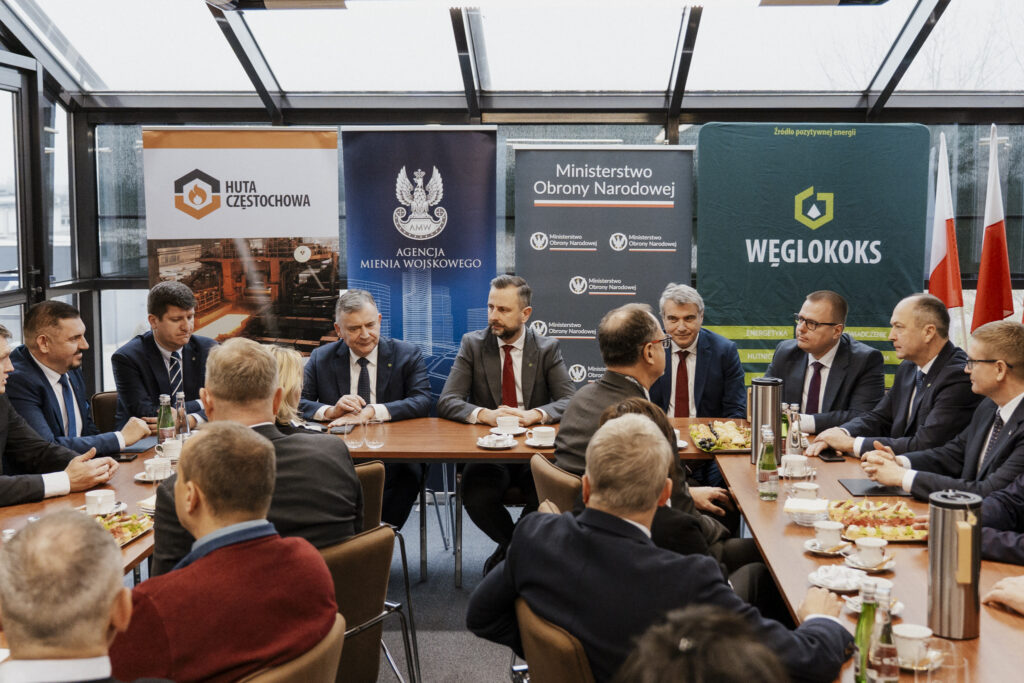
During a press conference, Deputy Prime Minister Władysław Kosiniak-Kamysz emphasized the role of the receiver in the entire process, pointing out that the actions taken in the course of the proceedings led to the restoration of the plant’s operational capacity.
[1] Act of February 28, 2003 Bankruptcy Law
JGA Legal and Tax Advisory Services is one of the member companies of the Chamber of Commerce and Industry in Katowice.